
Custom guides that place implants exactly where they were planned, at Highfield Dental Clinic, Edgbaston.
Planning an implant digitally is only useful if it is placed to that plan. A surgical guide transfers the plan precisely into your mouth.
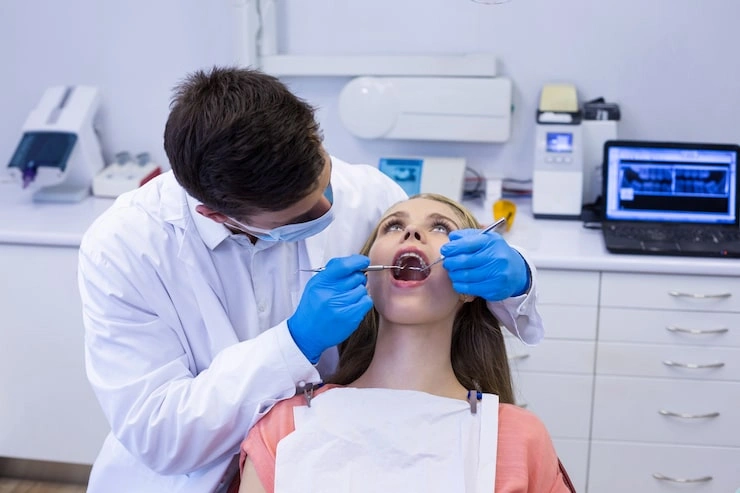
A surgical guide, sometimes called a stent, is a custom-made template that fits over your teeth or gums during implant surgery. It has precisely positioned openings that direct the surgical instruments to the planned position, angle and depth.
It is designed by combining your CBCT scan with a digital scan of your teeth, allowing the implant position to be planned around both the available bone and the shape of the final tooth. The guide is then 3D printed or milled to fit your mouth exactly.
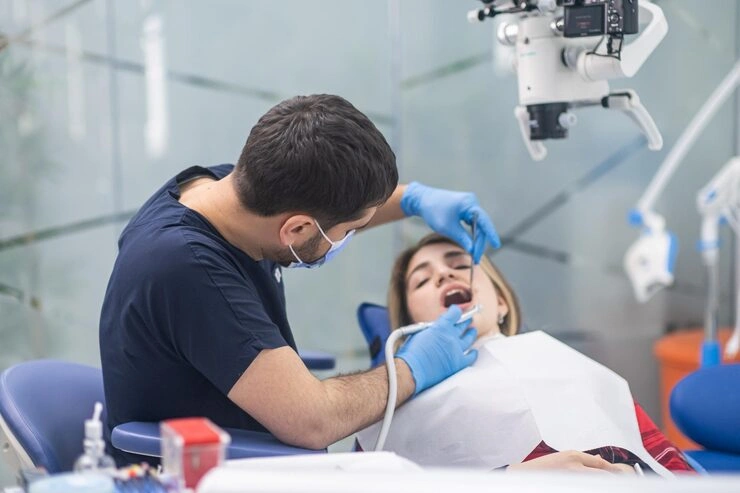
Planning implant treatment in Birmingham? Our experienced team uses digital guides for accurate, predictable placement.
The guide is made before surgery and used during the procedure. The process involves:
Your clinician will verify the guide seats fully before surgery begins, as accuracy depends entirely on a precise fit.
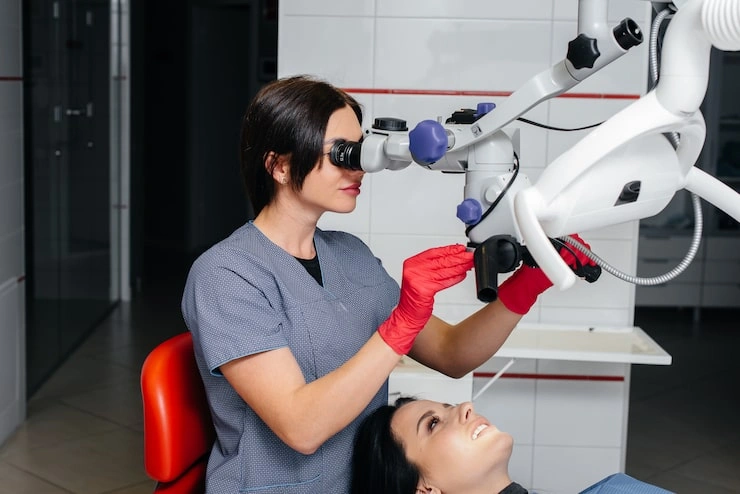
An implant that is even slightly misplaced can be difficult or impossible to restore well. Position affects how the crown emerges from the gum, how easy the implant is to clean, how forces are distributed and how natural the result looks.
Guided surgery also improves safety by helping avoid the nerve in the lower jaw and the sinus in the upper jaw. It often allows a smaller surgical opening, which can mean less swelling and quicker recovery. Guides are not appropriate for every case, and your clinician will explain whether one is planned for yours.

Not in every case. Guides are particularly valuable in aesthetic areas, where anatomy is tight, or where several implants are being placed.
It improves accuracy and helps avoid important structures such as nerves and sinuses, which contributes to safety. Careful planning and technique remain essential.
Often yes, and it can allow a smaller opening, which may mean less swelling and a more comfortable recovery.
Guides involve planning and manufacturing, so there is usually a cost associated. This will be set out in your written treatment plan.
It is designed digitally by merging your CBCT scan with a scan of your teeth, then 3D printed or milled to fit your mouth precisely.
Yes, it sits over your teeth or gums during placement and is removed once the implant is positioned.
