
Apicectomy, ECR repair and hemisection for teeth that need a surgical approach, at Highfield Dental Clinic, Edgbaston.
When infection persists despite good root canal treatment, surgery can save a tooth that would otherwise be lost.
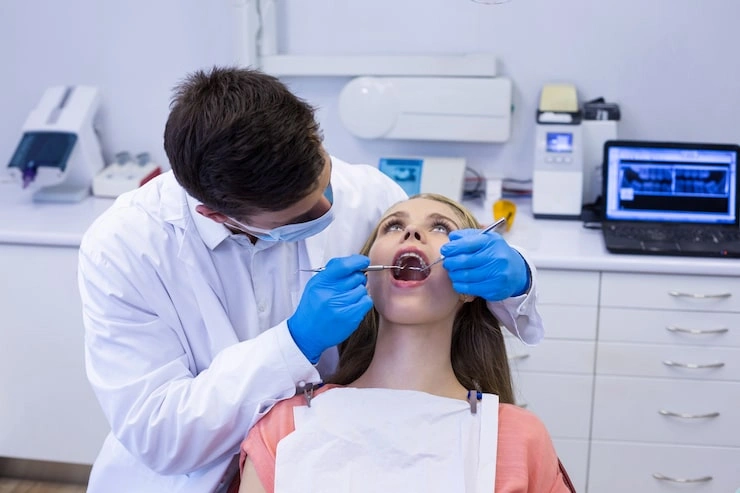
Root canal surgery, or endodontic surgery, treats problems at the root tip that cannot be resolved through the crown of the tooth. The most common procedure is an apicectomy, where the gum is lifted, the very tip of the root and surrounding infected tissue are removed, and the end of the canal is sealed with a filling.
Other procedures include ECR repair, which treats external cervical resorption where the tooth structure is being broken down from the outside, and hemisection, where one root of a multi-rooted tooth is removed while the remainder is kept and restored.
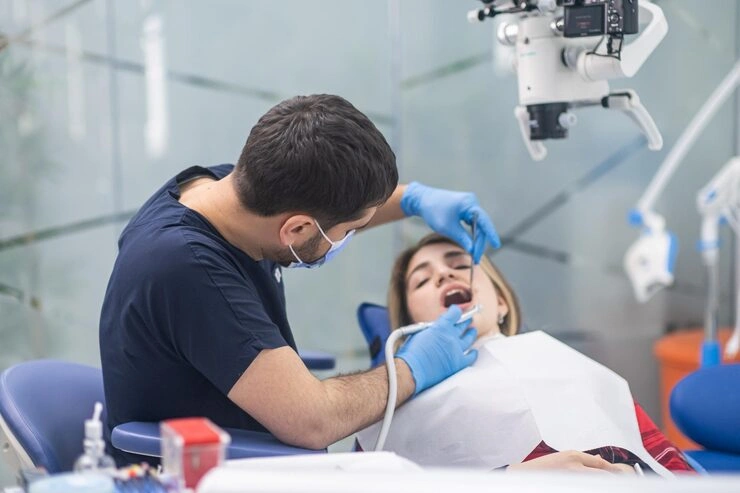
Persistent infection after root canal treatment in Birmingham? Our experienced team will assess whether surgery could save the tooth.
Surgery is carried out under local anaesthetic in a single appointment. It typically involves:
Stitches are usually removed after several days, and reviews with X-rays follow over the months that follow to check healing.
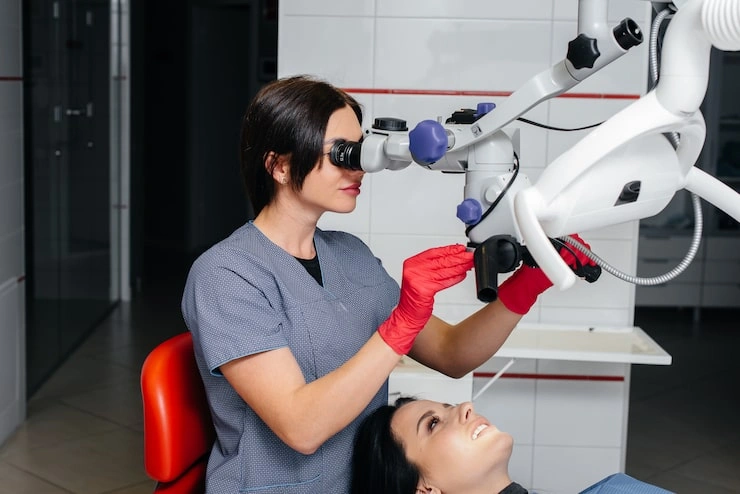
Surgery is generally considered when conventional retreatment is not possible or has already failed. This might be because a post or crown cannot be removed safely, because a canal is blocked, or because a cyst or persistent lesion remains at the root tip.
Success rates are good in well-selected cases, particularly with modern magnification and materials, but the outcome depends on the tooth, the cause and the quality of the existing root filling. Risks include swelling, bruising, infection and, depending on location, temporary altered sensation or sinus involvement. Your clinician will explain the alternatives, including retreatment and extraction.

The area is fully numbed, so you should feel no pain during the procedure. Swelling and soreness for several days afterwards are normal and manageable.
It is the removal of the tip of a tooth root along with infected tissue around it, followed by sealing the end of the canal from the outside.
Most people return to normal activities within a few days. Swelling and bruising typically peak early and settle over about a week.
No treatment can be guaranteed. Success rates are good in suitable cases, but your clinician will give you an honest assessment for your particular tooth.
It is the removal of one root of a multi-rooted tooth, usually a lower molar, where that root has failed. The remaining part is kept and restored.
Depending on the case, alternatives include root canal retreatment, or extraction followed by an implant, bridge or denture.
