
Careful, precisely planned placement of dental implants at Highfield Dental Clinic, Edgbaston.
Placement accuracy determines how well the final tooth looks and functions. Our team plans digitally and places implants to that plan.

Implant placement is the surgical stage where a small titanium screw is inserted into the jaw bone to act as an artificial tooth root. Over the following months, bone grows onto its surface in a process called osseointegration, anchoring it firmly in place.
Once integrated, the implant can support a crown, bridge or denture. Placement is carried out under local anaesthetic, and most patients are surprised by how straightforward the procedure feels compared with what they expected.

Ready to replace a missing tooth in Birmingham? Our experienced team will plan and place your implant with precision.
Placement usually takes a single appointment per implant. It typically involves:
Some cases allow a healing abutment at the same visit, while others need the gum closed over the implant. Your clinician will explain which applies to you.
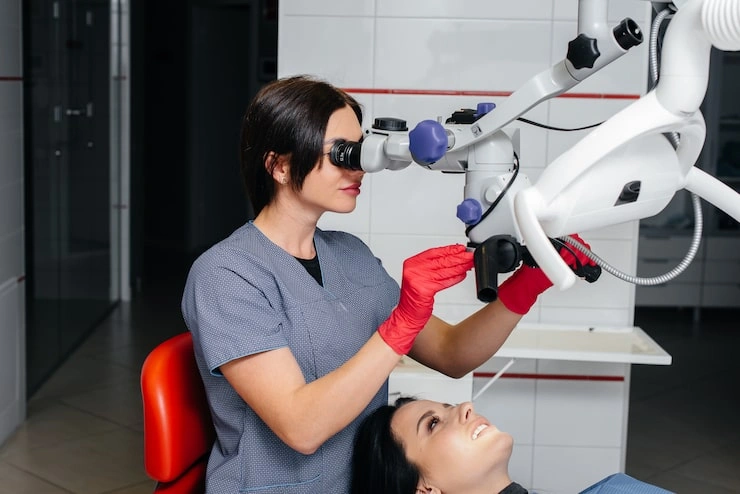
Expect some swelling, bruising and soreness for several days. Use pain relief as advised, apply a cold compress on the first day, eat softer foods and avoid the area when brushing until told otherwise. Avoid smoking entirely, as it substantially increases the risk of failure.
Integration typically takes several months, during which the implant must not be loaded. A temporary tooth can often be provided for appearance where the gap is visible. Once integration is confirmed, the restorative stage begins. Implants have good long-term success rates, though no treatment can be guaranteed, and long-term success depends heavily on your cleaning and maintenance.

The area is fully numbed, so you should feel pressure rather than pain. Most patients report far less discomfort than they anticipated.
Integration usually takes several months before the final crown is made. Your clinician will give you a timescale specific to your case.
Intravenous sedation is available for suitable patients. You will need someone to take you home and stay with you afterwards.
Not necessarily. A temporary solution can often be provided for visible gaps. Your clinician will discuss this at the planning stage.
Dental implants have good long-term success rates in suitable patients, though outcomes cannot be guaranteed. Smoking, gum disease and poor cleaning reduce success considerably.
Risks include infection, failure to integrate, damage to nearby structures and, in the lower jaw, altered sensation. Your clinician will explain the risks specific to your case.
