
Placing and safely removing posts in root-treated teeth at Highfield Dental Clinic, Edgbaston.
Posts help in specific situations and cause problems in others. Our team uses them only where they are genuinely needed, and removes them carefully when required.

A dental post is a small rod cemented into one of the root canals of a root-treated tooth. Its purpose is to help retain a core build-up when too little natural tooth remains above the gum to hold the core on its own.
Posts do not strengthen a tooth, which is a common misunderstanding. They only provide retention for the core, and preparing the canal to receive one removes root dentine, so they are used selectively rather than routinely.

Need a post placed, or a failing post removed, in Birmingham? Our experienced team will assess your tooth and explain the options.
Both procedures are carried out under local anaesthetic. They usually involve:
Post removal can take considerable time, particularly with well-cemented metal posts, and your clinician will explain the likely length beforehand.
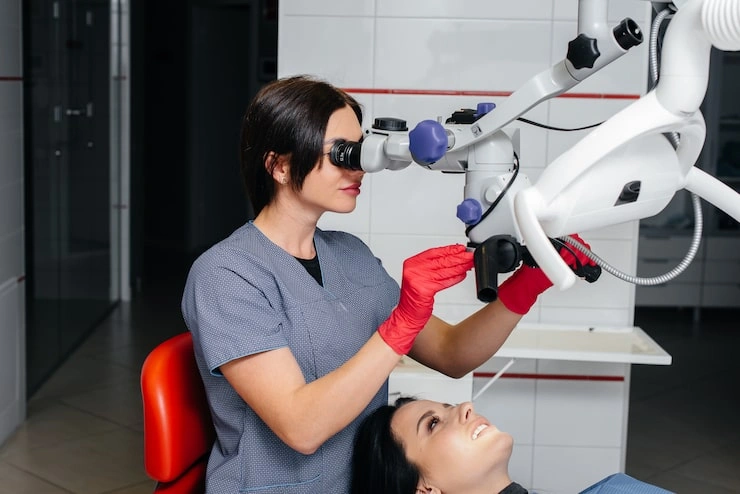
Removing a post carries a risk of root fracture or perforation, particularly with long, well-cemented metal posts in narrow or curved roots. A CBCT scan is often taken beforehand to assess the risk, and your clinician will tell you honestly if the chance of damaging the tooth is high.
Fibre posts are more flexible and behave more like natural dentine, and are generally easier to remove if retreatment is ever needed. Metal posts are stiffer and can concentrate stress in the root. Where a post cannot be removed safely, alternatives include root canal surgery or extraction with replacement.

No. A post retains the core build-up. Preparing the canal for one actually removes root dentine, which is why posts are used only when necessary.
Usually to allow root canal retreatment, or because the post has loosened, fractured or the tooth beneath has decayed.
There is a risk of root fracture or perforation, particularly with long metal posts. A CBCT scan helps assess this, and your clinician will advise honestly.
The area is numbed with local anaesthetic, so the procedure is comfortable. Root-treated teeth have no nerve sensation.
Fibre posts flex more like natural dentine and are easier to remove later. Metal posts are stiffer. Your clinician will choose based on your tooth.
Alternatives include root canal surgery or extraction with replacement by an implant, bridge or denture. We will discuss all options with you.
