
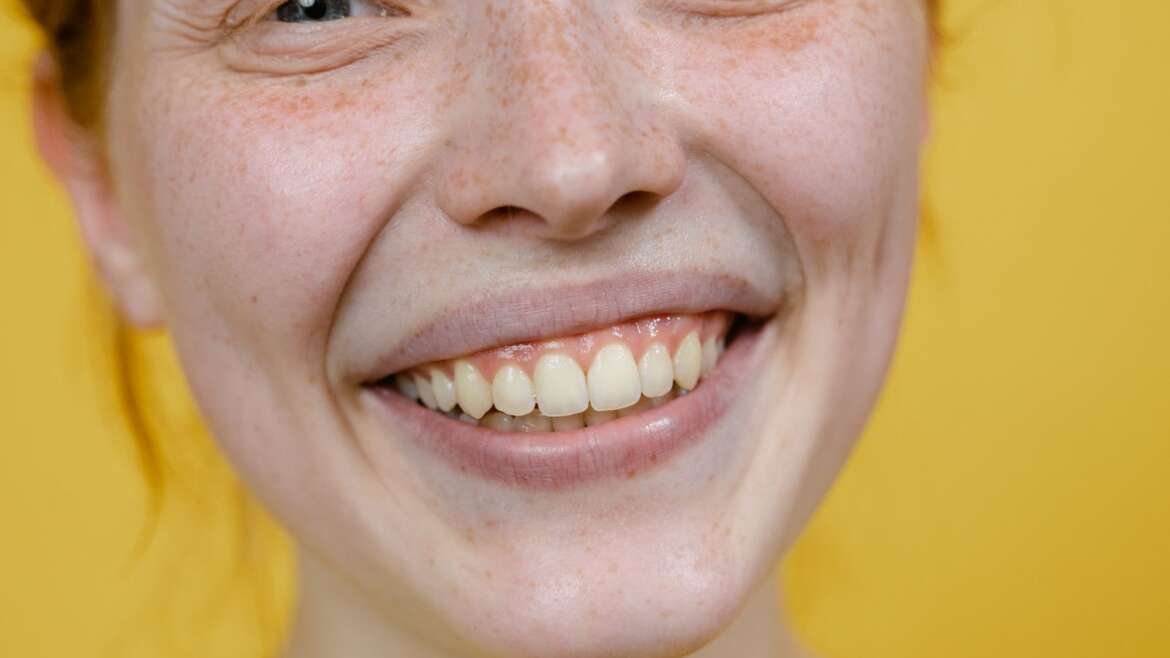
A smile makeover is not a single procedure. It is a planned sequence of treatments, arranged in a specific clinical order, that corrects colour, shape, alignment, and gum proportion together. Concerns about worn edges, uneven spacing, or discolouration are extremely common and rarely serious in themselves, though they sometimes reveal an underlying bite or wear problem that does need addressing. Modern cosmetic dentistry begins with diagnosis, not with a catalogue of procedures.
The order of treatment matters more than the individual treatments. Getting the sequence wrong is the most common reason cosmetic results look artificial or fail early.
Colour is almost always corrected first, because ceramic and composite cannot be lightened once placed. Supervised teeth whitening establishes the target shade that everything else will be matched to.
Alignment usually comes next, since moving a tooth into the correct position is far more conservative than grinding it down to disguise it. Discreet orthodontic treatment can create the space and symmetry that make minimal veneers possible.
Where teeth are missing, replacement is planned before final restorations so the bite is stable. Well-positioned dental implants support both function and the gum contour that frames a natural smile.
Reviewing the full range of treatments helps clarify which combination fits your goals, and you can request a consultation online whenever you are ready.
What Is a Smile Makeover?
A smile makeover is a coordinated treatment plan that improves dental appearance while respecting function, biology, and long-term stability. It may involve one treatment or several, and the aim is a result that looks unremarkable in the best sense, meaning nobody can identify what was done.
The Components Commonly Involved
- Whitening to establish base shade.
- Hygiene and periodontal therapy to create healthy pink tissue, which frames everything.
- Orthodontics to correct position, midline, and arch form.
- Composite bonding for conservative reshaping and edge repair.
- Veneers for colour and shape change where bonding is insufficient.
- Crowns or onlays for structurally compromised teeth.
- Implants or bridges to replace missing teeth.
- Gum contouring to correct uneven gum heights.
The Anatomy of a Natural-Looking Smile
Cosmetic dentistry follows measurable principles rather than taste alone. Understanding them explains why some results look convincing and others do not.
- Tooth proportion. Upper central incisors typically look best at a width-to-length ratio near 75 to 80 percent.
- Smile line. The edges of the upper teeth should broadly follow the curve of the lower lip.
- Midline. The junction between the two central incisors should align with the facial midline.
- Gingival symmetry. Gum heights should be level between matching pairs of teeth.
- Progressive width. Teeth appear progressively narrower toward the back, creating natural perspective.
- Incisal embrasures. Small triangular spaces between tooth edges prevent a flat, artificial appearance.
- Surface texture and translucency. Natural enamel is not uniformly glossy or opaque, and reproducing that variation is what defeats detection.
Why Sequence Is Everything
The Standard Clinical Order
- Diagnosis. Full examination, radiographs, photographs, and often digital scans.
- Disease control. Treating decay, gum disease, and any active infection. Cosmetic work over untreated disease fails.
- Bite and joint assessment. Identifying wear patterns, clenching, and joint symptoms.
- Whitening. Establishing the final shade before any ceramic is made.
- Orthodontics. Repositioning teeth to reduce how much tooth structure needs removing later.
- Gum work. Contouring, then allowing full tissue maturation before final impressions.
- Restorative phase. Bonding, veneers, crowns, or implant restorations.
- Protection. A night guard where grinding is present, which protects the investment.
- Maintenance. Hygiene reviews and periodic reassessment.
Comparing the Main Restorative Options
Composite Bonding
- Usually no tooth removal, so reversible.
- Completed in a single visit.
- Easily repaired and adjusted.
- More prone to staining and chipping over years.
Porcelain Veneers
- Minimal but irreversible enamel reduction in most cases.
- Excellent stain resistance and light behaviour.
- Longer lasting, with laboratory craftsmanship involved.
- Requires at least two appointments and a provisional stage.
Crowns
- Full coverage for heavily broken down or root-treated teeth.
- Strongest option for structurally weak teeth.
- Removes the most tooth structure, so reserved for teeth that need it.
Which to Choose
The guiding principle is minimum intervention. If bonding will achieve the result, bonding is preferable to veneers. If orthodontics can create space that avoids reducing enamel, that is the more biological route even though it takes longer.
Trial Smiles and Digital Planning
A responsible plan lets you see the outcome before anything irreversible happens.
- Digital smile design overlays proposed tooth positions onto photographs of your face.
- Diagnostic wax-up creates a physical model of the proposed result.
- Trial smile places temporary composite over the teeth without any preparation, so you can assess shape and length in the mirror and in photographs.
- Provisional restorations allow you to live with the design for a period before finalising.
This staged approach also protects against unrealistic expectations, which is the most common source of dissatisfaction in cosmetic dentistry.
Myths and Misconceptions
Myth: veneers mean filing teeth down to pegs. Contemporary minimal-preparation veneers remove a fraction of a millimetre of enamel, and some cases require no preparation at all. Aggressive reduction is outdated and unnecessary.
Myth: a smile makeover means very white, uniform teeth. Uniformity is what makes a result look artificial. Natural teeth vary subtly in shade, translucency, and shape, and good ceramic work reproduces that variation deliberately.
Myth: cosmetic dentistry is purely appearance-driven. Correcting worn edges, uneven bite loading, and missing teeth improves function and reduces future breakdown. Appearance is often the visible part of a structural problem.
Myth: results are permanent and maintenance-free. Restorations need review, polishing, and eventual replacement. Grinding, staining, and gum change all affect longevity, which is why maintenance is part of the plan.
Myth: cosmetic treatment is unbearable for nervous patients. Much of the sequence involves no drilling at all, including whitening, hygiene, trial smiles, and most bonding. Nervous patients often find it a comfortable reintroduction to dental care.
Realistic Expectations and Safety
- Sensitivity after whitening or preparation is common and temporary.
- Veneers and crowns can debond or fracture, particularly in grinders without protection.
- Gum contouring results depend on underlying bone position and biological limits.
- Implants require adequate bone and healthy gums, and success depends on hygiene.
- Any plan should include a written explanation of risks, alternatives, and maintenance requirements.
Considered Cosmetic Care in Edgbaston
Highfield Dental Clinic is a trusted private dental practice in Edgbaston, Birmingham, welcoming new private patients and offering an extensive range of specialised treatments in a professional and caring environment. Care includes check-ups and hygiene, cosmetic dentistry and smile makeovers, teeth whitening, orthodontics including Invisalign, dental implants, root canal therapy, extractions and oral surgery, mouth cancer screening, children’s dental care, and jaw problem management.
Emergency dental care is available for urgent needs, and the family-friendly, patient-centred approach serves Edgbaston, Birmingham, and the surrounding areas. Patients looking for a private dentist in Edgbaston or a family dentist in Edgbaston who also handles complex cosmetic work are given time to discuss options thoroughly before committing.
The clinic is located at 2 Highfield Road, Edgbaston, Birmingham, B15 3ED. Call 0121 455 6974 or email reception@sagroups.co.uk, with further information available at https://highfielddental.co.uk/.
Cosmetic treatment should be planned and delivered by a dental professional registered with the General Dental Council, following full assessment of dental health, bite, and gum condition. This article is general information and does not replace clinical examination, individual treatment planning, or scheduled follow-up review.
Frequently Asked Questions
How long does a smile makeover take?
It depends entirely on the components involved. Whitening and bonding can be completed within a few weeks, while a plan including orthodontics and implants may span a year or more. Sequencing is designed around biology rather than speed.
Do I have to have veneers to improve my smile?
No. Many results are achieved with whitening, hygiene, and conservative composite bonding alone. Veneers are recommended when the required change in shape or colour exceeds what bonding can deliver reliably.
Will my new teeth look obviously false?
Not when the design respects natural proportion, translucency, and surface texture. A trial smile stage lets you assess and adjust shape and length before any irreversible step, which is the best safeguard against an artificial appearance.
Can I have cosmetic treatment if I grind my teeth?
Yes, provided the grinding is managed. A protective night guard is usually part of the plan, and material choices are adjusted to withstand higher loads. Ignoring bruxism is the fastest way to fracture new restorations.
Does gum contouring hurt?
It is performed under local anaesthetic and is generally comfortable, with mild tenderness for a few days afterwards. Tissue needs several weeks to mature fully before final restorations are made, which is why the timing is staged.
Conclusion
A smile makeover works best when treatments are combined in the correct clinical order rather than chosen in isolation. Health comes first, colour before ceramic, and position before reshaping. Careful planning with a trial stage is what produces results that look entirely natural.
