
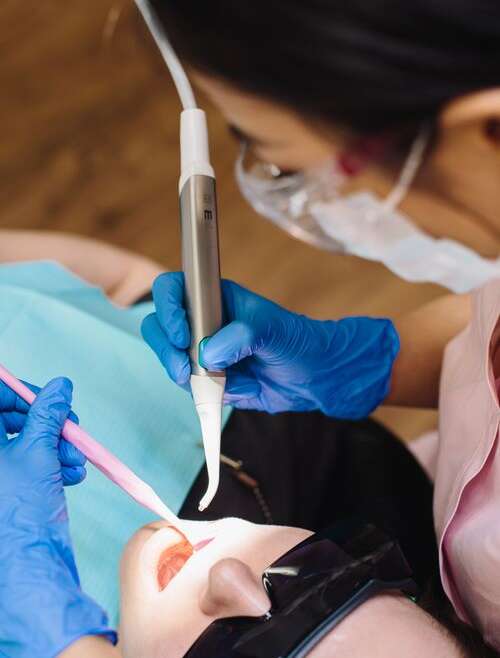
Most adults benefit from seeing a hygienist every six months, but patients with gum disease, diabetes, implants or a history of smoking are usually advised to attend every three to four months. Bleeding gums and surface staining are common and reversible in the early stages. Established periodontitis is not reversible, which is why the correct interval is decided by measured risk rather than habit, and a proper dental hygiene assessment is what sets that interval.
The six-month figure is a useful default, not a clinical rule. It came into common use through convention rather than evidence, and modern practice tailors recall intervals to the individual.
A thorough risk assessment at a Dental Clinic in Birmingham considers plaque levels, pocket depths, bleeding scores, smoking status and medical history. Highfield Dental Clinic uses those measurements to justify the interval it recommends.
Hygiene visits also underpin cosmetic results, since teeth whitening works far better on a clean, plaque-free surface.
Patients in braces or aligners need closer support, and anyone considering orthodontics should expect more frequent hygiene appointments during treatment.
You can review everything available on the our services page, or get in touch through contact to discuss the right schedule for you.
What a Hygienist Actually Does
A dental hygienist is a registered professional who specialises in preventing and treating gum disease. The appointment is far more than a polish.
- Recording plaque and bleeding scores to measure progress objectively.
- Full periodontal charting where indicated, measuring pocket depths around each tooth.
- Removing calculus above and below the gumline using ultrasonic and hand instruments.
- Removing stain from tea, coffee, red wine and tobacco.
- Applying fluoride varnish to protect exposed roots.
- Providing individually tailored technique coaching.
- Screening soft tissues and flagging anything that needs dentist review.
Recommended Intervals by Risk Group
Every 3 Months
- Patients in periodontal maintenance after gum disease treatment.
- People with dental implants.
- Smokers.
- Patients with poorly controlled diabetes.
- Those with heavy calculus formation.
Every 4 to 6 Months
- Patients in fixed orthodontic appliances.
- People with a history of gingivitis that recurs.
- Patients with crowns, bridges or partial dentures.
- Those with dry mouth from medication.
- Pregnant patients, due to hormonal effects on gum tissue.
Every 6 to 12 Months
- Adults with consistently healthy gums and excellent home care.
- Non-smokers with low plaque scores and no history of periodontal disease.
- Children and teenagers with good oral hygiene.
Why Three Months for Higher-Risk Patients?
The interval is biological rather than arbitrary. Subgingival bacterial populations return to disease-associated levels roughly 90 days after professional debridement. For someone with existing pockets, that repopulation restarts tissue destruction. Interrupting the cycle at three months keeps inflammation suppressed.
For a healthy mouth without pockets, that same cycle simply does not cause the same damage, which is why the interval can safely be longer.
Signs You Need to Go More Often
- Gums bleed when brushing or flossing.
- Persistent bad breath despite good cleaning.
- Visible hard deposits forming quickly after a clean.
- Gum recession progressing year on year.
- Teeth feeling looser or gaps appearing.
- Repeated sensitivity around the gumline.
- A medical diagnosis such as diabetes or a new medication causing dry mouth.
Hygienist Versus Dentist: What Is the Difference?
- Hygienist focus: prevention, gum health, calculus removal, home-care coaching.
- Dentist focus: diagnosis, restorations, extractions, root canal treatment, complex planning.
- Overlap: both screen for oral cancer and both monitor gum condition.
- Sequence: the dentist diagnoses and prescribes, the hygienist delivers and maintains.
- Frequency: hygiene visits are often more frequent than dentist examinations for higher-risk patients.
What Happens During the Appointment
- Medical history and medication review.
- Assessment of plaque, bleeding and pocket depths.
- Discussion of what the measurements mean compared with last time.
- Ultrasonic scaling to remove calculus, followed by hand instrumentation where needed.
- Polishing or air polishing to remove stain and biofilm.
- Fluoride varnish application if indicated.
- Personalised technique coaching, often using a mirror or disclosing solution.
- Agreement on the next recall interval based on findings.
Myths About Hygiene Appointments
Myth: Scaling loosens your teeth. Calculus does not support teeth. Removing it allows inflamed gums to shrink and firm up, which can briefly feel different but improves stability.
Myth: If my gums bleed, I should skip the appointment. Bleeding is the reason to attend. It is a sign of inflammation, not a reason to avoid cleaning.
Myth: Good brushing means I do not need a hygienist. No amount of home brushing removes calcified deposits below the gumline. Only instrumentation does.
Myth: Everyone needs a clean every six months. Intervals should be individualised. Some patients need three months, others can safely go twelve.
Myth: Hygiene appointments are cosmetic. Periodontal disease is the leading cause of adult tooth loss. Hygiene therapy is preventive healthcare, not a beauty treatment.
Getting the Most From Each Visit
- Ask for your bleeding and plaque scores so you can track improvement.
- Bring your current toothbrush and interdental brushes so technique can be checked.
- Mention any new medications, since many cause dry mouth.
- Do not clean unusually thoroughly the day before, as it hides the true picture.
- Ask which two or three specific areas you are consistently missing.
- Book the next appointment before you leave.
Preventive Care in Edgbaston and Birmingham
Prevention is where the largest long-term gains in dental health are made. Highfield Dental Clinic, a trusted private practice at 2 Highfield Road, Edgbaston, Birmingham, B15 3ED, welcomes new private patients and builds hygiene therapy into every long-term plan rather than treating it as an add-on.
Appointments can be booked on 0121 455 6974 or by email at reception@sagroups.co.uk, and urgent problems are handled through emergency dental care for those searching for an Emergency Dentist in Birmingham.
Alongside hygiene, the clinic offers check-ups, orthodontics including Invisalign, extractions and oral surgery, root canal therapy, dental implants, teeth whitening, cosmetic dentistry and smile makeovers, mouth cancer screening, children’s dental care and jaw problem management. Free orthodontic consultations are available for anyone considering Invisalign Birmingham treatment, and stable gum health is also the foundation of Best Teeth Whitening Birmingham results.
All hygienists and dentists are registered with the General Dental Council (GDC), which regulates scope of practice, infection control and continuing professional development. Whether you are looking for the Best Dental Clinic in Edgbaston, a Private Dentist in Edgbaston, or a Dentist in Edgbaston for the whole family, that registration is the standard to check first.
Frequently Asked Questions
Does a hygiene appointment hurt?
Most people find it comfortable. Where gums are inflamed or roots exposed, topical or local anaesthetic can be used, and sensitivity usually settles within a day or two.
How long does an appointment take?
Typically 30 to 45 minutes for routine care. Periodontal maintenance appointments often take longer because of charting and subgingival work.
Can I have a hygiene visit while pregnant?
Yes, and it is often recommended. Hormonal changes increase gum inflammation during pregnancy. Always inform the clinician which trimester you are in.
Will my teeth look whiter afterwards?
Removing surface stain often reveals the natural shade of your teeth, which can look noticeably brighter. It does not change the intrinsic colour, which is what whitening treatment addresses.
Is air polishing better than traditional polishing?
Air polishing is efficient at removing stain and biofilm, particularly around orthodontic appliances and implants. The choice depends on your specific needs and any medical considerations.
Conclusion
How often you should see a hygienist depends on measurable risk factors, not on a standard six-month assumption. Higher-risk patients generally need three to four monthly visits, while those with consistently healthy gums may safely attend less often. Ask for your scores at each appointment so the interval is based on evidence about your mouth rather than convention.
This article provides general guidance. Your personal recall interval should be set by your dentist or hygienist following clinical assessment.
