
Gum assessment
A gum assessment checks the tissues and bone that support your teeth. It helps your clinician explain what’s causing symptoms such as bleeding and what care may help.
Before
Tell the team about changes such as bleeding, sensitivity or difficulty cleaning around particular teeth.
During
Ask what the team has found and whether this visit is for assessment, cleaning, treatment or review.
After
Ask the team to show you the home-care steps that suit your mouth and confirm when your gums will next be checked.
Clinicians

Technology
Digital X-rays
Can help assess the bone around the teeth where imaging is clinically needed.
FAQs
What do the measurements mean?
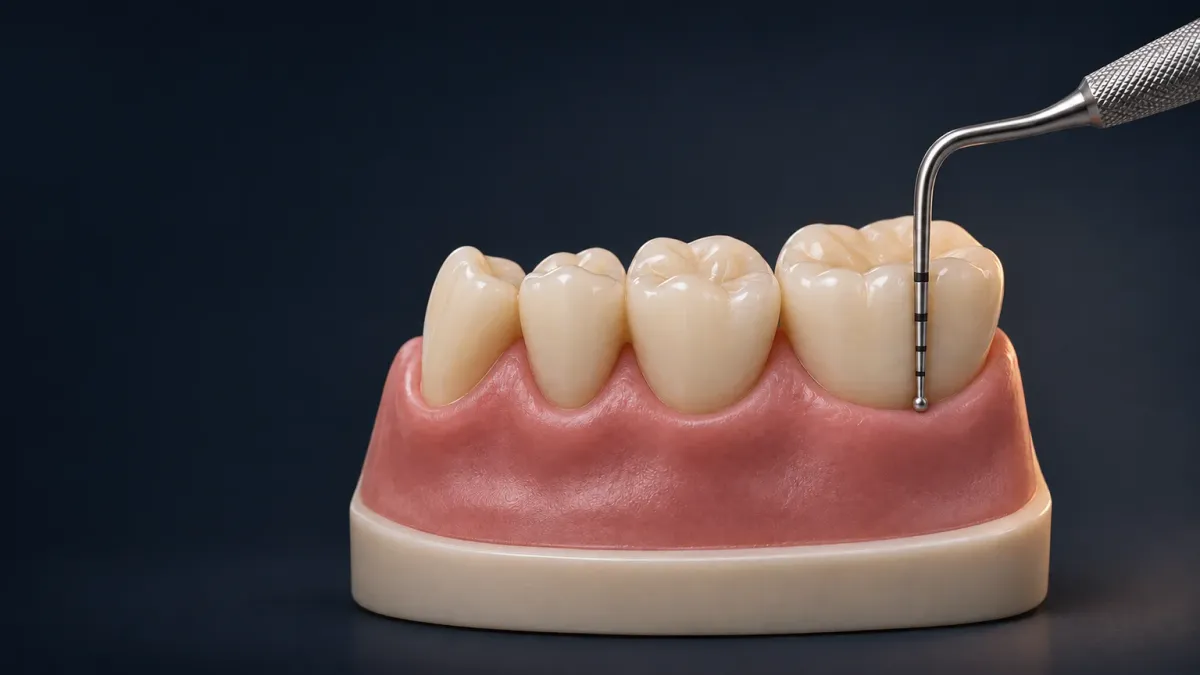
They record the spaces between your teeth and gums. The clinician looks at the measurements, bleeding and other findings together to assess your gum health.
Will I have a clean during the assessment?
The assessment is mainly to understand what’s happening and decide what care is suitable. Cleaning or treatment can be planned separately.
Deep gum cleaningFurther reading
What the clinician checks
The clinician asks about your health, checks for bleeding or looseness and measures the space between the gum and each tooth. X-rays may help show the supporting bone if more information is needed.
Planning the next steps
The team will explain the findings and talk through care options. These may include changes to home cleaning, treatment below the gum line and a review.
A gum assessment checks for signs of disease in the gums and the tissues that support your teeth.
During an assessment
Your clinician can check for bleeding, recession, loose teeth and the depth of the spaces between your gums and teeth. X-rays may help assess the supporting bone.
Planning care
The findings help determine whether you need advice, routine cleaning, cleaning below the gums or further treatment. Your clinician will explain how the gums will be checked again after care.