
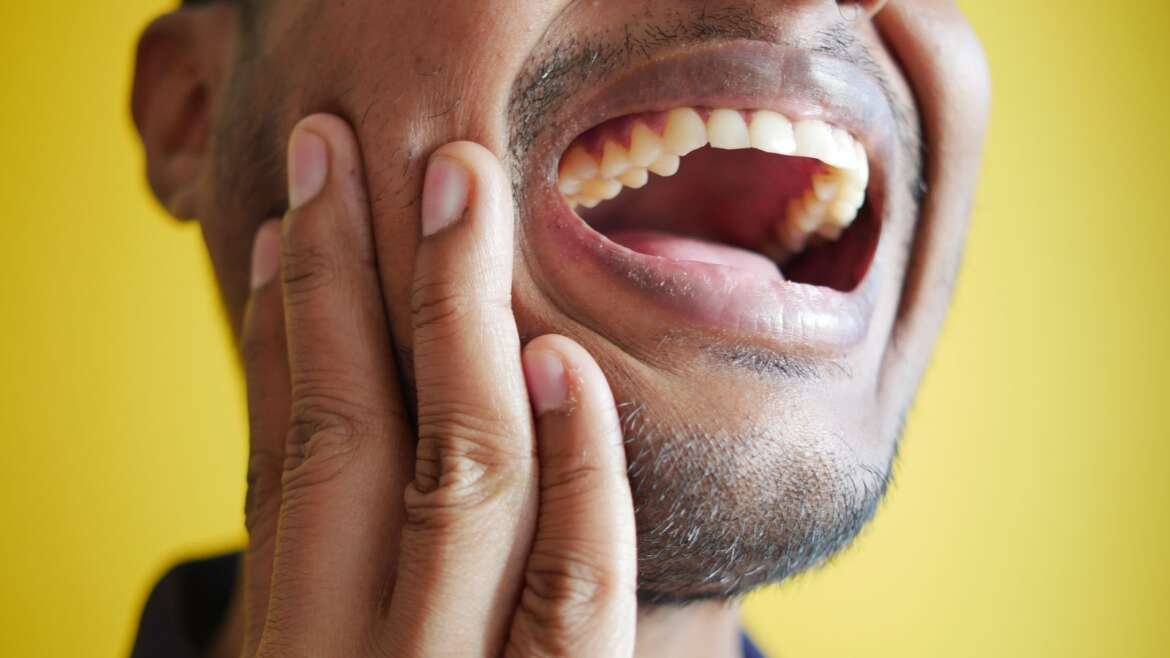
Tooth sensitivity is usually caused by exposed dentine, the layer beneath enamel that contains microscopic tubules leading directly to the nerve. A short, sharp twinge when you drink something cold is extremely common and often temporary, particularly after whitening or a new filling. Sensitivity that lingers for more than 30 seconds, wakes you at night, or affects a single tooth is a different matter and points to decay, a crack, or pulp inflammation that needs assessment. If cold drinks have started making you flinch, an examination at Highfield Dental Clinic will separate everyday sensitivity from something that needs treatment.
Roughly one in three adults experiences dentine hypersensitivity at some point. It is one of the most frequent complaints heard in general practice, and in most cases it responds well to simple measures.
The first step is nearly always a professional clean and a gum assessment. Regular dental hygiene appointments remove hardened deposits, calm inflamed tissue, and let a clinician see exactly where recession has exposed root surface.
When a single tooth reacts strongly and the ache continues after the stimulus is removed, the pulp may be involved, and root canal therapy is sometimes the treatment that saves the tooth.
Sensitivity can also stem from worn or cracked restorations, erosion, or gum recession, all of which are managed differently across the range of treatments listed under our services.
To get a clear diagnosis rather than a guess, request an appointment or call 0121 455 6974.
What Is Dentine Hypersensitivity?
Enamel is the hard outer shell of the crown and contains no nerves. Beneath it lies dentine, a softer tissue crossed by thousands of tiny tubules filled with fluid. These tubules connect to the pulp, where the nerve sits.
When enamel wears away or gum recession exposes the root, those tubules open to the mouth. Cold, heat, sweet foods, and even air movement cause the fluid inside to shift rapidly, which the nerve interprets as a sharp pain. This is known as the hydrodynamic theory, and it explains why sensitivity feels instant and stabbing rather than dull.
The Main Causes
Gum Recession
Roots are covered by cementum, which is far thinner and softer than enamel. Once gums recede, that protection is quickly lost.
Overbrushing
Hard bristles and heavy pressure abrade both enamel and gum. Sensitivity from overbrushing is often worst on the outer surfaces of canines and premolars.
Acid Erosion
Fizzy drinks, citrus, wine, sports drinks, and reflux dissolve enamel chemically. Erosion is increasingly common and frequently underestimated.
Grinding and Clenching
Bruxism flexes teeth at the neck, causing enamel to chip away in a wedge shape and exposing dentine right at the gumline.
Cracked Teeth
A crack allows fluid movement deep within the tooth. Classic signs are pain on releasing a bite rather than on biting down.
Recent Dental Treatment
New fillings, crown preparation, and whitening commonly produce temporary sensitivity that settles within days to a few weeks.
Everyday Sensitivity vs a Warning Sign
| Feature | Typical dentine sensitivity | Possible pulp or crack problem |
| Duration | A few seconds | Lingers 30 seconds or longer |
| Teeth affected | Often several | Usually one specific tooth |
| Trigger | Cold, sweet, air | Heat, biting, or spontaneous |
| Night pain | No | Common |
| Response to sensitive toothpaste | Improves over weeks | Little or no benefit |
How a Dentist Investigates Sensitivity
- Detailed history. What triggers it, how long it lasts, and whether it wakes you.
- Visual examination. Checking for recession, wear facets, notching at the gumline, and failing restorations.
- Cold and percussion testing. Comparing the suspect tooth against healthy neighbours.
- Bite testing. A specialised tool identifies cracks by loading individual cusps.
- Radiographs. Revealing decay beneath fillings, bone levels, and periapical changes.
- Diagnosis and plan. Findings are explained and options discussed before anything is started.
Treatment Options That Work
At-Home Measures
- Desensitising toothpaste containing potassium nitrate or stannous fluoride, used consistently for at least four weeks
- Rubbing a small amount of that toothpaste directly onto the sensitive area before bed and not rinsing
- Switching to a soft or extra-soft brush and lightening pressure
- Waiting at least an hour after acidic food or drink before brushing
- Using a straw for acidic drinks and rinsing with water afterwards
In-Practice Treatments
- High-concentration fluoride varnish applied to exposed root surfaces
- Desensitising agents and resin sealers that occlude open tubules
- Bonded restorations to cover abrasion notches at the gumline
- A custom night guard where grinding is the underlying driver
- Gum grafting in selected cases of significant recession
- Root canal therapy where the pulp is irreversibly inflamed
Myths About Sensitive Teeth
Myth: Sensitivity means you have a cavity. Often it does not. Generalised sensitivity is usually about exposed dentine rather than decay, though decay must always be excluded.
Myth: Brushing harder cleans better. It removes more tooth and gum, not more plaque. Technique and time matter far more than force.
Myth: Sensitive toothpaste works instantly. Most formulations need two to four weeks of consistent use to build a measurable effect.
Myth: Whitening permanently damages teeth. Professionally supervised whitening causes temporary sensitivity in many patients but does not weaken enamel when used correctly.
Myth: Nothing can be done about it. The large majority of cases improve substantially once the specific cause is identified and addressed.
Preventing Sensitivity Returning
- Brush twice daily for two minutes with a soft brush and fluoride toothpaste.
- Clean between teeth every day to prevent the gum inflammation that leads to recession.
- Limit acidic drinks to mealtimes rather than sipping through the day.
- Wear a night guard if you clench or grind.
- Attend hygiene appointments at the interval recommended for you.
- Report any new or one-sided sensitivity early rather than waiting for it to worsen.
Safety note: this article is general information and does not replace an in-person assessment. Sudden severe toothache, facial swelling, or pain that disturbs sleep should be reviewed promptly by a qualified dentist registered with the General Dental Council.
Why Professional Assessment Matters
Sensitivity is a symptom, not a diagnosis. Treating it with toothpaste alone can mask a cracked cusp or hidden decay for months while the underlying problem advances. A qualified clinician distinguishes between reversible and irreversible pulp inflammation, which determines whether a tooth needs a simple filling or endodontic treatment. All clinicians providing dental care in the UK must be registered with the General Dental Council, and that registration underpins the standards of assessment, record keeping, and follow-up you should expect.
Care at Highfield Dental Clinic
Highfield Dental Clinic is a trusted private dental clinic in Edgbaston, Birmingham, welcoming new private patients and offering an extensive range of specialised treatments in a professional and caring environment. The approach is family friendly and patient centred, serving Edgbaston, Birmingham and the surrounding areas.
Services span dental check-ups and hygiene, orthodontics including Invisalign, extractions and oral surgery, root canal therapy, dental implants, teeth whitening, cosmetic dentistry and smile makeovers, mouth cancer screening, children’s dental care, jaw problem management, and related treatments. Emergency dental care is available for urgent needs, including sudden severe sensitivity or swelling.
The practice is at 2 Highfield Road, Edgbaston, Birmingham, B15 3ED. You can telephone 0121 455 6974 or email reception@sagroups.co.uk to ask a question before booking. Appointments can be arranged easily online, and free orthodontic consultations are available for patients considering treatment to straighten their teeth.
Frequently Asked Questions
Why are my teeth suddenly sensitive to cold?
Sudden onset often follows gum recession, aggressive brushing, a period of acidic diet, recent whitening, or a newly cracked filling. If it affects one tooth and lingers, book an assessment rather than waiting.
How long does sensitivity after a filling last?
Usually a few days to two weeks. Sensitivity that persists beyond a month, or that worsens, should be reviewed because the filling may need adjusting or the pulp may be inflamed.
Can receding gums grow back?
Gum tissue does not regenerate spontaneously. Recession can be halted with better technique and professional care, and in selected cases a graft can restore coverage.
Is sensitive toothpaste safe to use every day?
Yes. It is designed for long-term daily use, and consistency is what makes it effective. Many patients continue with it indefinitely to keep symptoms controlled.
Does teeth whitening always cause sensitivity?
Not always, but it is common and temporary. Using a lower concentration, shorter wear times, and a desensitising gel beforehand usually keeps it comfortable.
Conclusion
Sensitive teeth are common, rarely dangerous, and almost always improvable once the cause is identified. Short sharp twinges usually mean exposed dentine, while lingering pain in one tooth needs prompt investigation. A straightforward examination gives you an accurate answer and a plan that actually works.
