
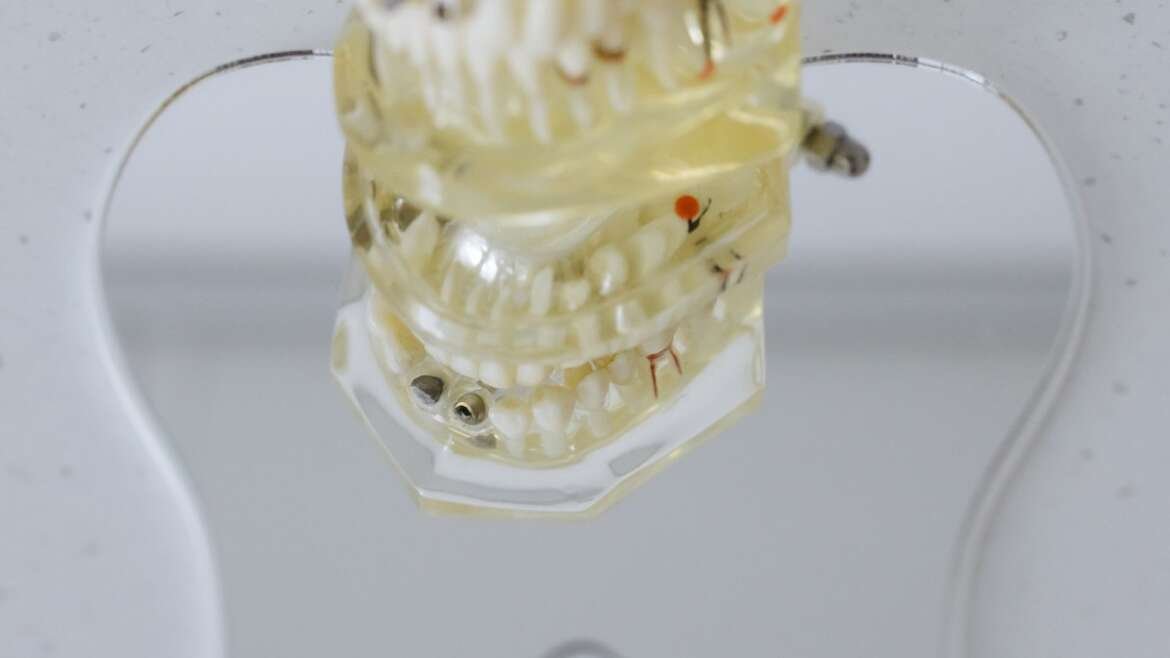
Mouth cancer screening is a short, painless visual and physical examination of the lips, tongue, cheeks, palate, floor of the mouth, and neck, and it is routinely carried out during a standard dental check-up. Most changes found are entirely harmless, and the majority of mouth ulcers and lumps are temporary and benign. What makes screening important is that early-stage oral cancer is highly treatable while late-stage disease is not, which is why the team at Highfield Dental Clinic includes it as part of a thorough examination.
The screening itself takes only a few minutes. It requires no needles, no radiation, and no preparation from you.
Because the examination happens at routine visits, keeping to your recommended interval matters. Attending dental hygiene appointments provides an additional set of trained eyes on the soft tissues several times a year.
Screening sits alongside a broad clinical remit, and the full range of services covers everything from preventive care to complex restorative and cosmetic treatment.
If you have noticed something that has not healed within three weeks, do not wait for your next scheduled visit. You can book an appointment online or get in touch through the contact page to be seen promptly.
What Is Mouth Cancer?
Mouth cancer, also referred to as oral cancer, is a malignant growth arising in the tissues of the oral cavity or oropharynx. The great majority are squamous cell carcinomas originating in the flat cells lining the mouth and throat.
The most frequently affected sites are the tongue, particularly its side borders, and the floor of the mouth. Other sites include the gums, inner cheeks, hard and soft palate, tonsils, and lips.
Why Early Detection Changes Everything
When oral cancer is identified while still localised, treatment is generally less extensive and outcomes are substantially better. When it is found after spreading to the lymph nodes, treatment becomes more complex and prognosis worsens considerably. The clinical difference between those two scenarios is often a matter of months.
Is a Mouth Ulcer or Lump Something to Worry About?
Usually not. Here is a practical way to think about it.
- Common and temporary: traumatic ulcers from biting the cheek, a sharp filling, or new dentures, plus aphthous ulcers. These heal within seven to fourteen days.
- Common and benign: geographic tongue, fibrous lumps from repeated trauma, oral thrush, and lichen planus. These need diagnosis but are not malignant.
- Requires prompt assessment: any ulcer, red patch, white patch, or lump that has not resolved within three weeks.
The three-week rule is the single most useful thing to remember. Almost all benign lesions heal well inside that window.
Signs and Symptoms to Watch For
- An ulcer or sore that fails to heal within three weeks.
- A white patch, known as leukoplakia, or a red patch, known as erythroplakia.
- A lump or thickening in the mouth, lip, or neck.
- Unexplained persistent pain or numbness in the mouth or lips.
- Difficulty or discomfort when swallowing.
- Persistent hoarseness or a change in voice.
- A tooth that becomes loose without an obvious dental cause.
- Unexplained bleeding from the mouth.
- A dentures fit that has suddenly changed.
- Unexplained weight loss alongside any of the above.
None of these individually means cancer. Each of them means the tissue should be examined by a professional.
Known Risk Factors
Established Risks
- Tobacco in all forms, including cigarettes, cigars, pipes, and chewing tobacco.
- Alcohol, with risk rising sharply when combined with tobacco.
- Human papillomavirus, particularly HPV-16, which is strongly linked to oropharyngeal cancers.
- Betel quid and areca nut, chewed with or without tobacco.
- Sun exposure for cancers of the lip.
- Age, with incidence increasing after 40, although cases in younger adults are rising.
Contributory Factors
- A diet low in fruit and vegetables.
- Chronic irritation from ill-fitting appliances or sharp tooth edges.
- Immunosuppression.
- Previous head and neck cancer.
It is worth noting that a meaningful proportion of patients have none of these risk factors, which is precisely why screening is universal rather than selective.
What Happens During a Screening
- History. Questions about smoking, alcohol, any lesions you have noticed, and how long they have been present.
- Extra-oral examination. Inspection and gentle palpation of the face, jaw, and neck lymph nodes.
- Lips and vestibule. Examination of the outer and inner surfaces of both lips.
- Cheeks. Retraction and inspection of the buccal mucosa on both sides.
- Tongue. Assessment of the upper surface, both lateral borders, and the underside, with the tongue gently held using gauze.
- Floor of mouth. Visual inspection and bimanual palpation, which is a high-risk site.
- Palate and throat. Examination of the hard palate, soft palate, and visible oropharynx.
- Documentation. Recording any findings with measurements so change can be tracked accurately.
If something suspicious is identified, the standard pathway is urgent referral to a specialist for definitive diagnosis, which usually involves biopsy. A dentist screens and refers, and a specialist diagnoses.
Screening Versus Diagnosis: An Important Distinction
- Screening identifies changes that warrant further investigation. It cannot confirm or exclude cancer.
- Biopsy provides histological diagnosis and is the only definitive test.
- Watchful waiting may be appropriate for a lesion with a clear traumatic cause, with review at a defined short interval.
- Urgent referral is the correct response to any persistent unexplained lesion, and this is not something to feel embarrassed about requesting.
Myths and Misconceptions
Myth: mouth cancer only affects heavy smokers and drinkers. Tobacco and alcohol are the strongest risk factors, but HPV-associated cancers occur in non-smokers, including younger adults with no traditional risk profile.
Myth: it would be obviously painful. Early oral cancer is frequently painless, which is one of the main reasons it is discovered late. Absence of pain is not reassurance.
Myth: screening requires an uncomfortable procedure. A screening examination involves looking and gentle feeling. There is nothing invasive about it.
Myth: any mouth ulcer means cancer. The overwhelming majority of ulcers are traumatic or aphthous and heal quickly. Duration is what distinguishes concern from normality.
Myth: I should wait and see whether it goes away. Waiting is reasonable for up to three weeks. Beyond that, waiting only delays diagnosis, and delay is the single factor most strongly associated with poorer outcomes.
Reducing Your Risk
- Stop using tobacco in any form, and seek support rather than relying on willpower alone.
- Keep alcohol within recommended limits and avoid combining it heavily with tobacco.
- Use lip balm with sun protection when outdoors.
- Eat a diet rich in fruit and vegetables.
- Consider HPV vaccination where eligible, following medical advice.
- Check your own mouth monthly in good light, including under the tongue.
- Attend routine dental examinations so screening happens consistently.
Thorough Examinations in Edgbaston, Birmingham
Highfield Dental Clinic is a trusted private dental practice in Edgbaston, offering an extensive range of specialised treatments in a professional and caring environment. Care includes dental check-ups and hygiene, mouth cancer screening, orthodontics including Invisalign, root canal therapy, extractions and oral surgery, dental implants, teeth whitening, cosmetic dentistry and smile makeovers, children’s dental care, and jaw problem management.
The practice accepts new private patients and offers emergency dental care for urgent needs, serving families across Edgbaston, Birmingham, and the surrounding areas. Patients seeking the best dental clinic in Edgbaston or a top dentist in Birmingham generally value thoroughness, and soft tissue screening is a good measure of exactly that.
The clinic is at 2 Highfield Road, Edgbaston, Birmingham, B15 3ED. To arrange an examination, call 0121 455 6974 or email reception@sagroups.co.uk, and more detail is available at https://highfielddental.co.uk/.
Screening must be carried out by a dental professional registered with the General Dental Council, and any suspicious finding requires specialist referral for definitive diagnosis. This article is general information only and is not a substitute for clinical examination or the follow-up review that monitoring a lesion requires.
Frequently Asked Questions
How often should I have a mouth cancer screening?
Screening is performed as part of every routine dental examination, so the frequency matches your recall interval. Patients with higher risk factors may be advised to attend more often, and your dentist will recommend an interval based on your individual profile.
Does mouth cancer screening hurt?
No. It involves looking carefully at the soft tissues and gently feeling the neck, jaw, and floor of the mouth. There are no injections, no radiation, and no recovery time involved.
What happens if something suspicious is found?
The finding is documented and, where appropriate, you are referred urgently to a hospital specialist for further investigation, usually including a biopsy. Referral is a precaution and most referred lesions turn out to be benign.
Can I screen my own mouth at home?
Self-checking is genuinely useful and takes two minutes in good light. Look at your lips, cheeks, tongue including both sides and underneath, the floor of the mouth, and the palate, and feel your neck for lumps. It complements rather than replaces professional screening.
Are white patches in the mouth always dangerous?
No. Many white patches are caused by friction, thrush, or a benign condition such as lichen planus. However, a persistent white patch that cannot be wiped away should always be assessed, because a small proportion carry potential for change.
Conclusion
Mouth cancer screening is quick, painless, and built into routine dental examinations. Most findings are harmless, but anything that has not healed within three weeks deserves professional assessment. Early detection remains the single most powerful factor in successful treatment.
