
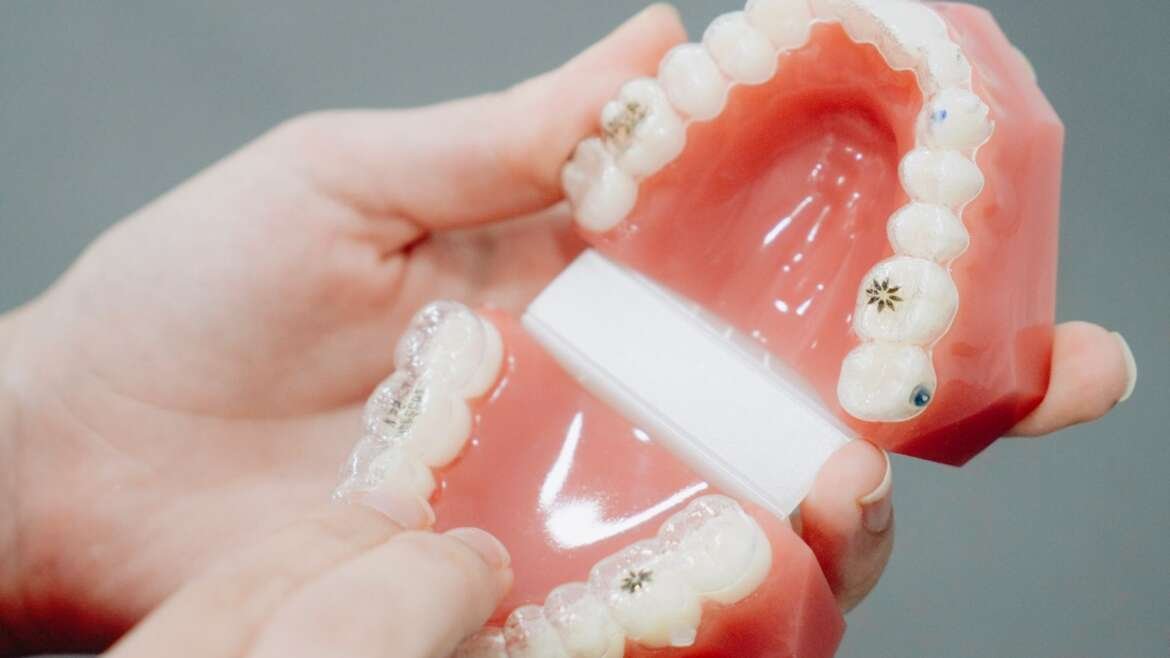
Clear aligners and fixed braces both straighten teeth, but they suit different problems: aligners excel at mild to moderate crowding and spacing, while fixed appliances handle complex rotations, significant bite discrepancies, and large tooth movements more predictably. Crooked teeth are extremely common and are not a medical emergency, though they can contribute to uneven wear, cleaning difficulty, and jaw strain over time. The starting point is always a diagnostic assessment, and orthodontic treatment begins with records rather than a recommendation.
There is no single best appliance. There is only the appliance best matched to your specific tooth positions, bite relationship, gum health, and lifestyle.
Alignment is also a health issue rather than a purely cosmetic one, because crowded teeth trap plaque in places a brush cannot reach. Regular dental hygiene appointments during treatment are what keep gums healthy while teeth are moving.
A full picture matters before starting. Reviewing the range of treatments available helps clarify whether alignment alone will achieve your goal or whether restorative work is also involved.
As a trusted private practice in Edgbaston, Highfield Dental Clinic welcomes new private patients and provides an extensive range of specialised treatments in a professional, caring environment.
If you would like your options assessed, you can request an appointment online, and the team is happy to answer questions in advance through the contact page.
What Is Orthodontic Treatment?
Orthodontics is the branch of dentistry concerned with the position of the teeth and the relationship between the upper and lower jaws. Treatment applies controlled, gentle force over time so that bone remodels around the tooth root and the tooth settles in a new position.
That biological process is the same regardless of appliance. What differs is how the force is delivered, how precisely it can be directed, and how much of the work depends on the patient.
The Two Main Systems
- Clear aligners: a sequence of removable, transparent trays, each moving the teeth a fraction of a millimetre.
- Fixed braces: brackets bonded to the teeth connected by an archwire, adjusted at intervals.
Why Straight Teeth Matter Clinically
- Plaque control. Overlapping teeth create sheltered surfaces where plaque matures into calculus.
- Gum health. Crowding is associated with localised inflammation and recession at rotated teeth.
- Even wear. A poorly distributed bite concentrates force on a few teeth, accelerating enamel wear and chipping.
- Jaw comfort. Some bite discrepancies contribute to muscle strain and joint symptoms.
- Restorative planning. Aligning teeth first often allows smaller, more conservative restorations later.
- Trauma risk. Prominent upper front teeth are more vulnerable to injury.
Clear Aligners: Strengths and Limitations
Advantages
- Virtually invisible in normal conversation.
- Removable for eating, brushing, and flossing, which makes hygiene far easier.
- No brackets or wires, so fewer soft tissue irritations.
- Digital planning allows the projected outcome to be visualised before starting.
- Fewer routine adjustment visits for many patients.
Limitations
- Results depend entirely on wearing the trays for the prescribed hours each day.
- Severely rotated teeth and large vertical movements are harder to achieve.
- Attachments bonded to the teeth are often needed for grip, which reduces invisibility slightly.
- Trays must be removed for anything other than water.
Fixed Braces: Strengths and Limitations
Advantages
- Continuous force with no reliance on patient compliance.
- Superior control over rotations, root position, and complex bite correction.
- Effective for significant crowding, impacted teeth, and skeletal discrepancies alongside other measures.
- Ceramic bracket options reduce visibility considerably.
Limitations
- More visible than aligners, even with tooth-coloured brackets.
- Cleaning around brackets requires more effort and specific tools.
- Some dietary restrictions to avoid debonding brackets or distorting wires.
- Initial soreness and occasional soft tissue rubbing.
Side by Side Comparison
- Appearance: aligners are the most discreet option available.
- Compliance dependence: high for aligners, minimal for fixed braces.
- Complexity handled: fixed appliances cover a wider range of cases.
- Oral hygiene: easier with aligners because they come out.
- Comfort: both cause mild tenderness after adjustments, with aligners avoiding wire and bracket irritation.
- Emergencies: fewer with aligners, since there are no wires to break.
- Retention afterwards: identical requirement for both, and non-negotiable.
The Treatment Journey Step by Step
- Consultation. Discussion of concerns, goals, and expectations, plus a screening examination.
- Diagnostic records. Photographs, radiographs, and digital scans or impressions.
- Health preparation. Treating decay and stabilising gum disease first, because teeth should never be moved through inflamed tissue.
- Treatment planning. Analysis of crowding, arch width, bite relationship, and root positions, followed by a written plan.
- Appliance fitting. Bonding brackets or issuing the first aligners with attachments placed.
- Active phase. Regular reviews to confirm the teeth are tracking as planned.
- Refinement. Additional aligners or wire adjustments to perfect the final detail.
- Retention. Fitting fixed or removable retainers and explaining lifelong wear.
Retention: The Part Everyone Underestimates
Teeth do not become permanently fixed once treatment ends. The periodontal fibres retain elastic memory, and relapse is the single most common cause of disappointment after orthodontics.
- Retainers are required indefinitely, usually with reducing frequency over time.
- A bonded wire behind the front teeth offers passive, continuous retention.
- Removable retainers need disciplined wear and careful cleaning.
- Retainers must be checked periodically, because a broken bonded wire can allow unwanted movement.
Myths and Misconceptions
Myth: braces are only for teenagers. Adult orthodontics is one of the fastest growing areas in dentistry. Bone remodels throughout life, so age is not a barrier, although treatment may take longer where gum support is reduced.
Myth: aligners work for everyone. They are highly capable but not universal. Certain movements remain more predictable with fixed appliances, and an honest assessment should say so.
Myth: orthodontic treatment is very painful. Most patients describe pressure and tenderness for a few days after each adjustment or new tray, easily managed with soft food and simple pain relief.
Myth: straightening teeth weakens them. Controlled movement within healthy bone does not weaken teeth. Excessive force or moving teeth through untreated gum disease can cause harm, which is why supervision by a qualified clinician matters.
Myth: mail-order aligners are equivalent. Remote treatment without radiographs, examination, or in-person supervision cannot detect decay, gum disease, or root problems. Orthodontic movement should always be supervised by a dental professional registered with the General Dental Council.
Choosing Between the Two
Aligners Are Often the Better Fit When
- Crowding or spacing is mild to moderate.
- Appearance during treatment is a priority.
- You are confident about consistent daily wear.
- You play wind instruments or contact sport.
Fixed Braces Are Often the Better Fit When
- Teeth are severely rotated or crowded.
- The bite relationship needs substantial correction.
- Consistent tray wear would be difficult.
- Teeth need to be moved a long distance.
Private Orthodontic Care in Edgbaston
Highfield Dental Clinic is a trusted private practice in Edgbaston serving Birmingham and the surrounding areas with a family-friendly, patient-centred approach. Treatment spans dental check-ups and hygiene, orthodontics including Invisalign, extractions and oral surgery, root canal therapy, dental implants, teeth whitening, cosmetic dentistry and smile makeovers, mouth cancer screening, children’s dental care, and jaw problem management.
New private patients are welcome, and emergency dental care is available for urgent needs so that a broken bracket or sudden pain does not derail your treatment. Patients looking for a private dentist in Edgbaston or considering Invisalign Birmingham options are encouraged to ask questions freely at the consultation stage, and free orthodontic consultations are offered where applicable.
The clinic is located at 2 Highfield Road, Edgbaston, Birmingham, B15 3ED. You can call 0121 455 6974 or email reception@sagroups.co.uk, and further information is available at https://highfielddental.co.uk/.
Orthodontic treatment should only be planned and monitored by a dental professional registered with the General Dental Council. This article is general information and does not replace clinical assessment, radiographic diagnosis, or the ongoing review that safe tooth movement requires.
Frequently Asked Questions
How long does orthodontic treatment take?
Simple alignment of the front teeth can take a matter of months, while comprehensive treatment involving bite correction often runs to eighteen months or longer. The determining factors are how far the teeth must move and how consistently the appliance is worn.
Are clear aligners as effective as fixed braces?
For mild to moderate cases, outcomes are comparable when the trays are worn as prescribed. For complex rotations, large space closure, or significant bite discrepancies, fixed appliances generally offer more predictable control.
Will I need to wear a retainer forever?
Yes, in some form. Teeth have a natural tendency to drift back toward their previous positions, so long-term retention is considered part of treatment rather than an optional extra. Wear time usually reduces over the years.
Can I have orthodontic treatment if I have crowns or implants?
Often yes, with adjustments to the plan. Implants cannot be moved because they are fused to bone, so they act as fixed anchors and the plan is designed around them. Crowned teeth can generally be moved normally.
Does orthodontic treatment cause gum recession?
Well-controlled movement within the bony envelope does not. Recession is associated with moving teeth too far or too fast, thin gum tissue, and poor plaque control during treatment, which is why hygiene reviews are scheduled throughout.
Conclusion
Clear aligners offer discretion and easier cleaning, while fixed braces provide greater control over complex movements. The right choice depends on your diagnosis and your daily routine rather than on popularity. A full assessment with records turns that decision into a clear, personalised plan.
